
Meta Brand Rights Protection
For over two years at Meta, I helped transform Brand Rights Protection from an early-stage tool into a scalable platform used by global brands to protect their intellectual property across Facebook and Instagram.
My role
Facilitation
Co-organized and facilitated biannual roadmap workshops, helping cross-functional teams align on priorities and strategic initiatives.
Retrospectives
Facilitated retrospectives following major product launches to capture learnings, improve team processes, and inform future work.
Product Vision
Co-created the product's service blueprint, shaping the long-term product strategy and vision while aligning stakeholders around a shared direction.
Experience Design
Designed the end-to-end visual and interaction experience, balancing user needs, business goals, and technical constraints.
Problem and context
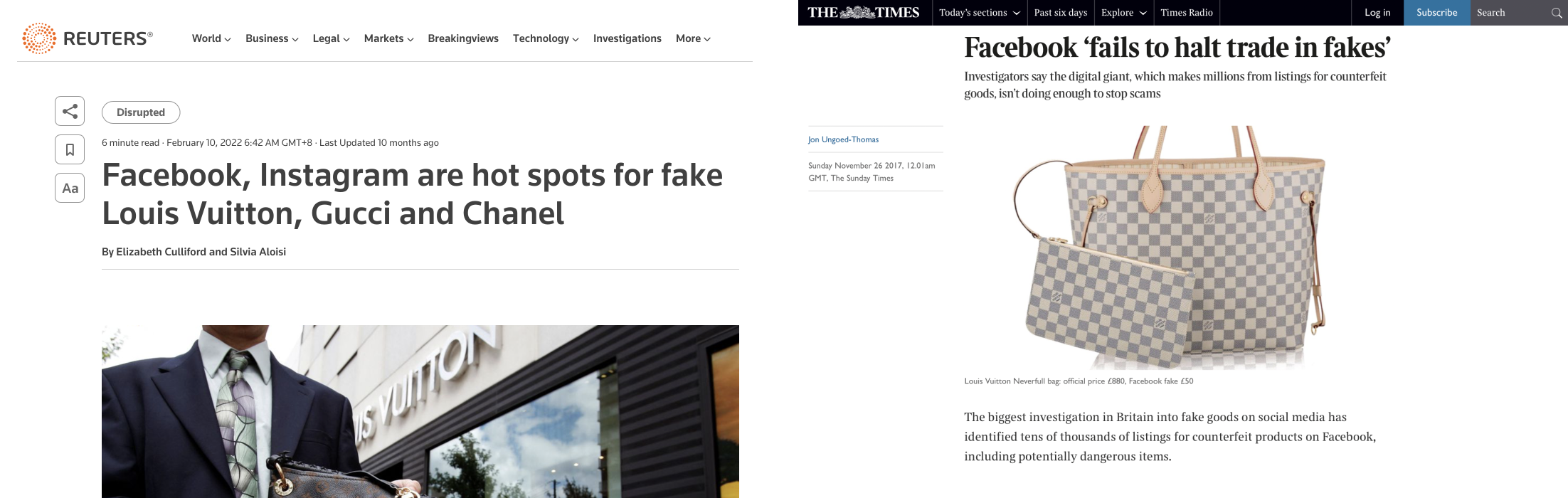
Meta's platforms, including Facebook and Instagram, host millions of listings and accounts, making it an ongoing challenge to identify content that infringes on brand trademarks. Counterfeit sellers often operate at scale and closely mimic legitimate businesses, making automated detection difficult.
While Meta can detect suspicious behavior, brands themselves are best positioned to distinguish authentic products from counterfeits. This creates a need for tools that enable rights holders to efficiently review, report, and enforce their intellectual property across the platform.
About Brand Rights Protection
Brand Rights Protection is a tool that allows brands to protect their intellectual property across Meta technologies. It allows brands to identify and report content for counterfeit, trademark and copyright infringement, and impersonation.
How it works
Brand Rights Protection is essentially a product which leverages on the expertise of brands to tell us who and what infringe on their intellectual property. An example would be a popular sports brand who’s aware of the most nuanced details regarding the authenticity of a particular sneaker—this might be stitching details, colours, and materials.
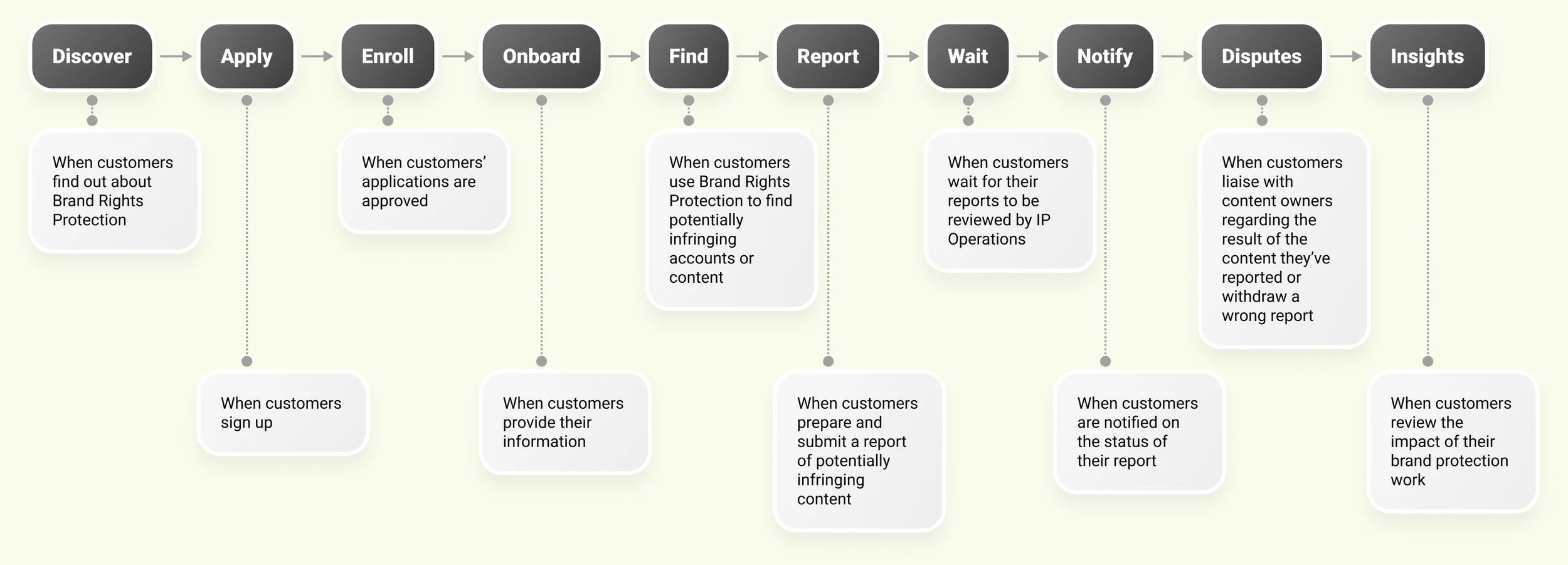
To illustrate this, a Brand Rights Protection customer’s journey map would look like this:
The beginning and product diagnosis
The product was already built, albeit a very rudimentary one, with not that many customers. When our team took ownership of it, the content designer and I developed this customer experience map and crafted a service blueprint to show what front and back stage processes supported every stage of our customer’s journey.
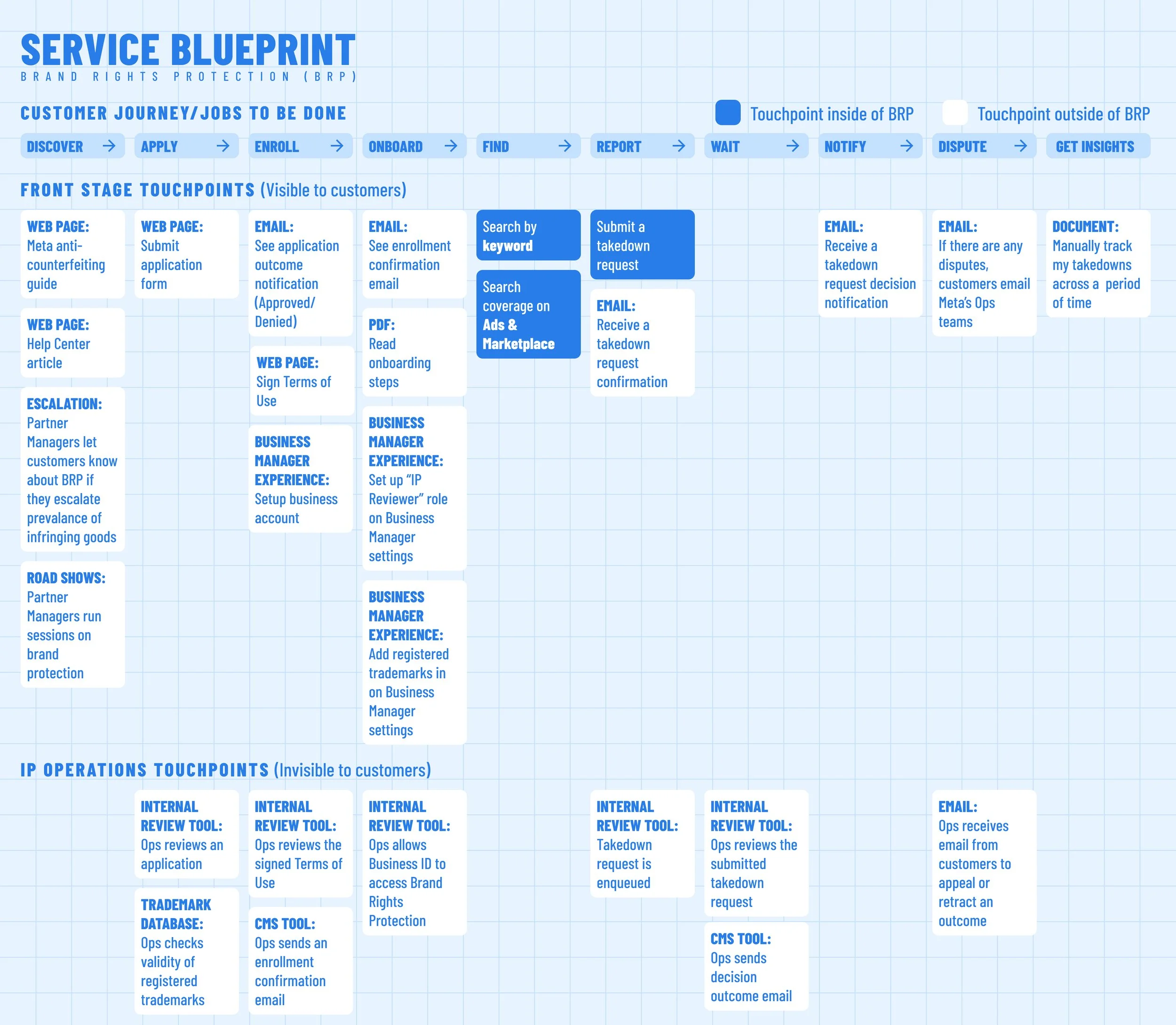
This artefact also enabled us to influence the team as we ideated and prioritised on the most impactful pieces to put on our product roadmap.
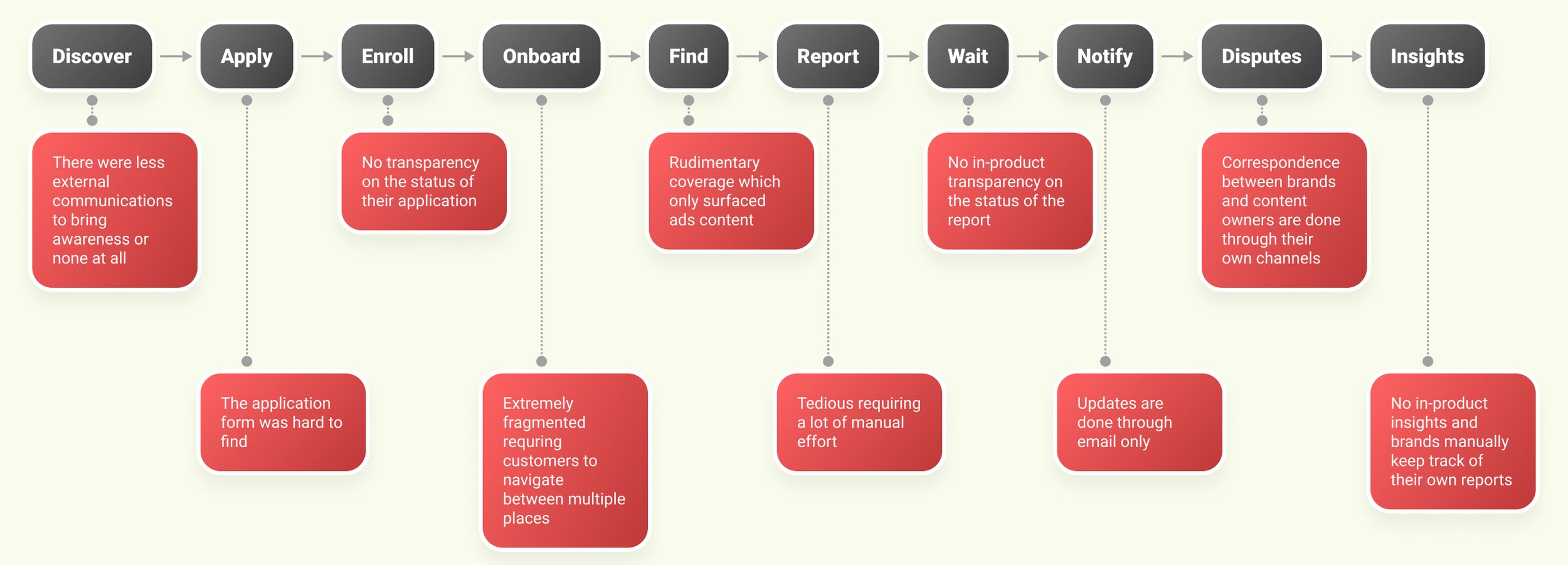
The issues we highlighted are illustrated below:
Defining our strategy
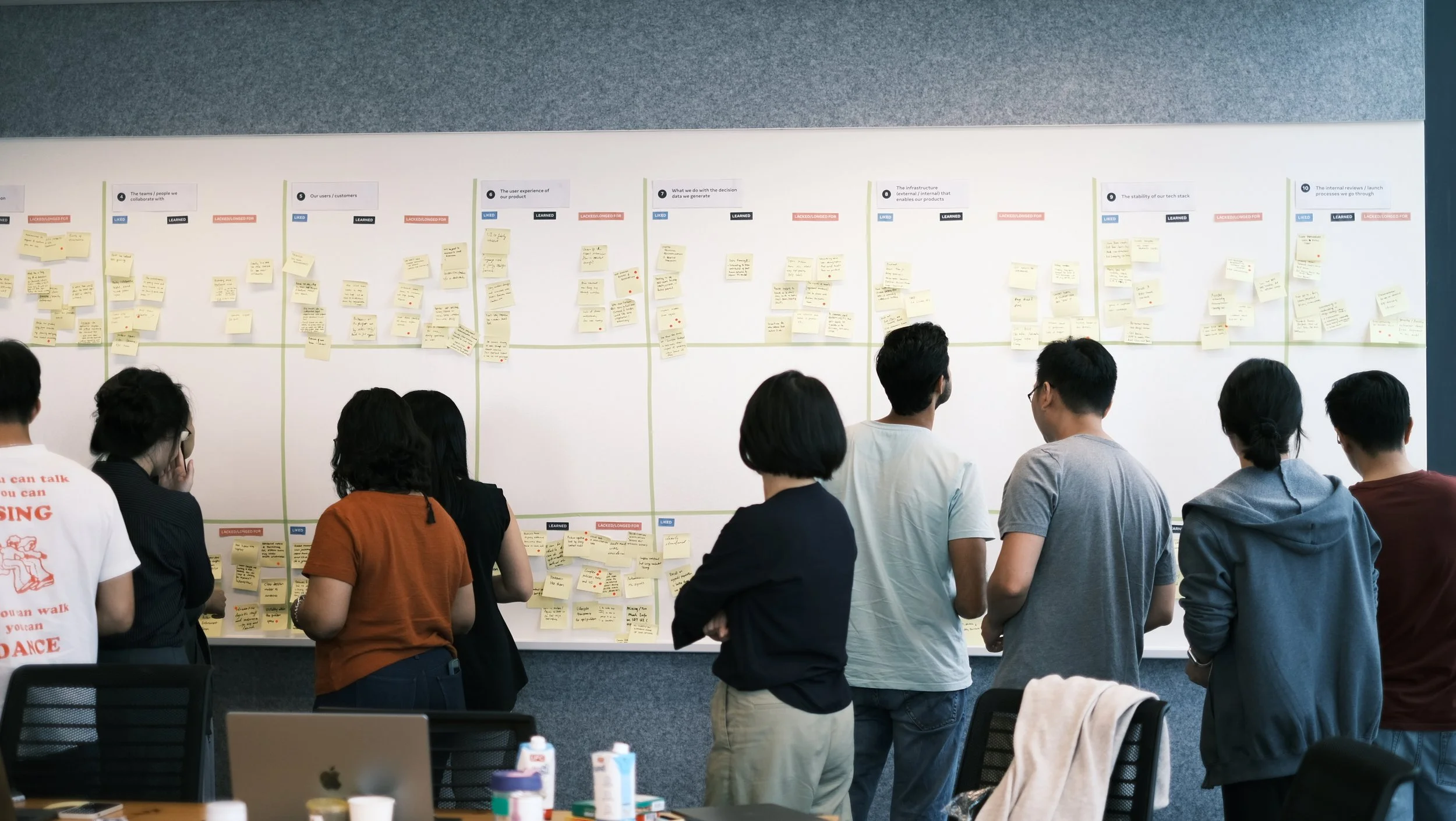
One of my responsibilities was to assist the team in defining our strategy, roadmap and prioritizations, as well as a product vision. The team would roadmap every 6 months and scheduled a launch moment towards the end of the period. Workshops were a vital part in structuring and articulating our thoughts about the short, mid, and long term initiatives we’d work on.
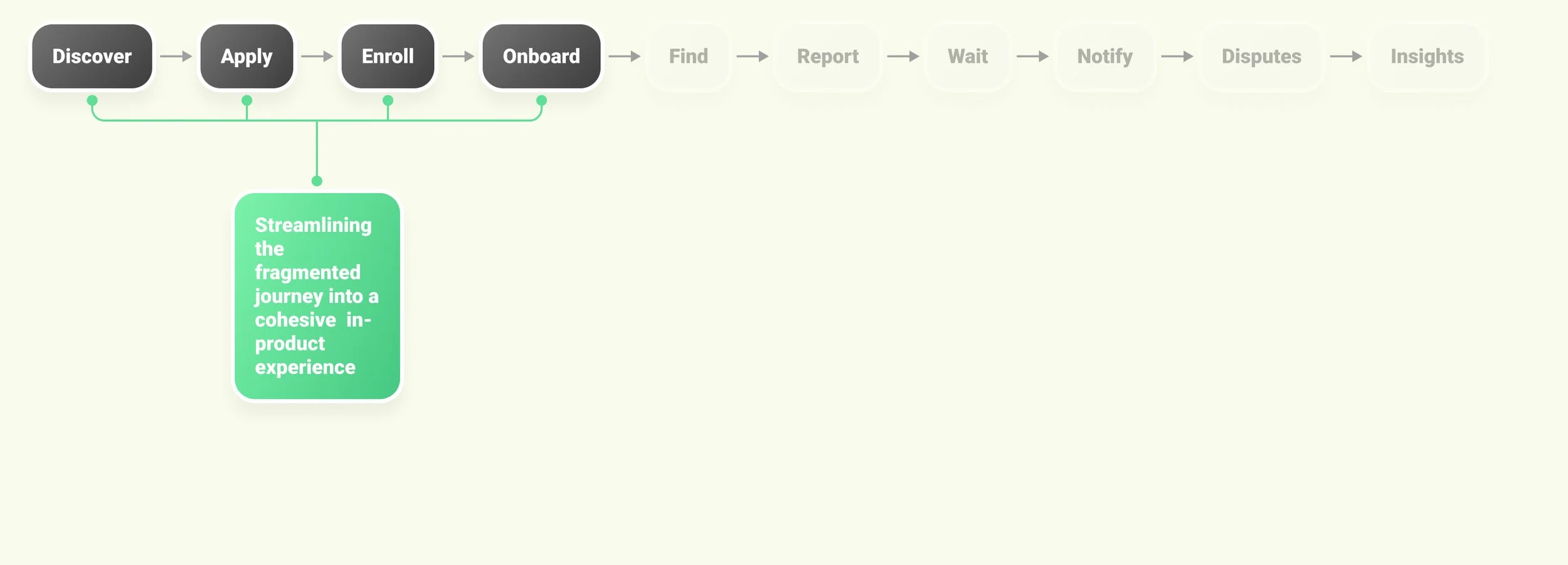
Fixing the top of our funnel
The initial experience was a fragmented one for our customers. It was one of the bigger priorities our team set out to fix. This involved streamlining the complex top-of-funnel experiences into a simple and cohesive one.
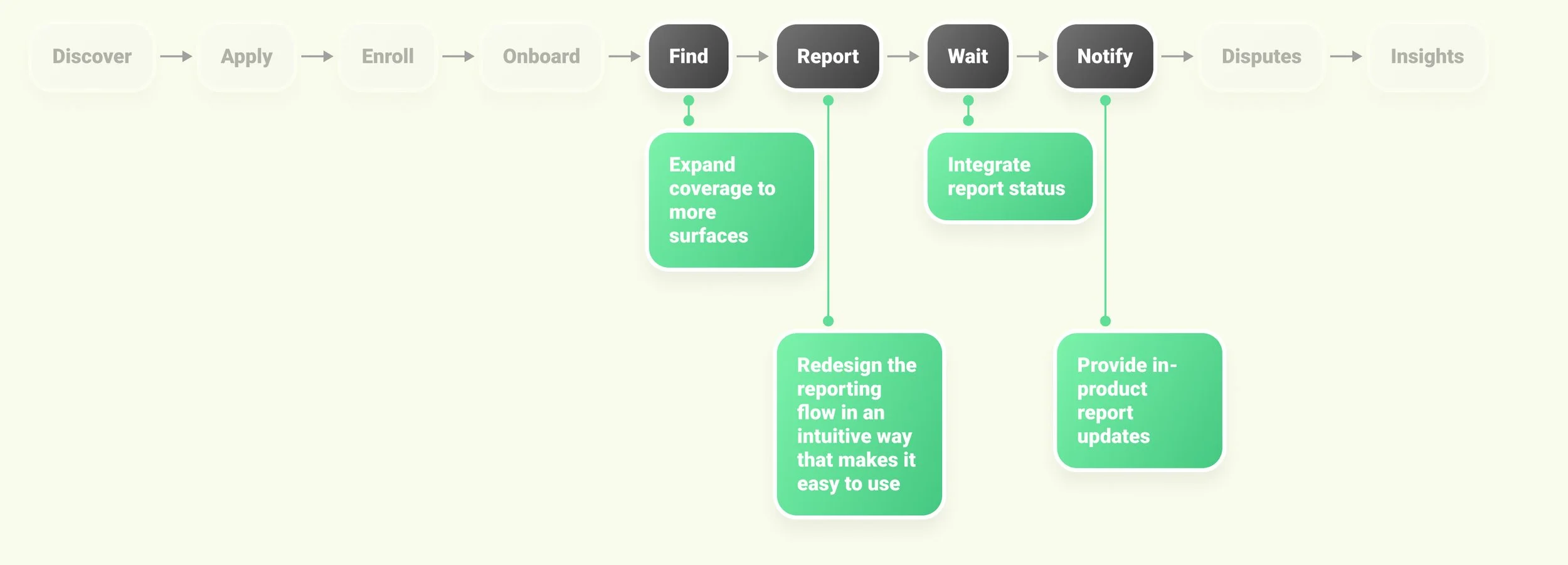
Bolstering the core functionality
We made significant progress in improving the core experience of “Find”, “Report”, “Wait”, and “Notify”. The original experience had:
Very little coverage in terms of accounts and content you could search
A tedious reporting flow which involved a lot of manual effort
No in-product transparency on the status of the report
Updates are done through email only
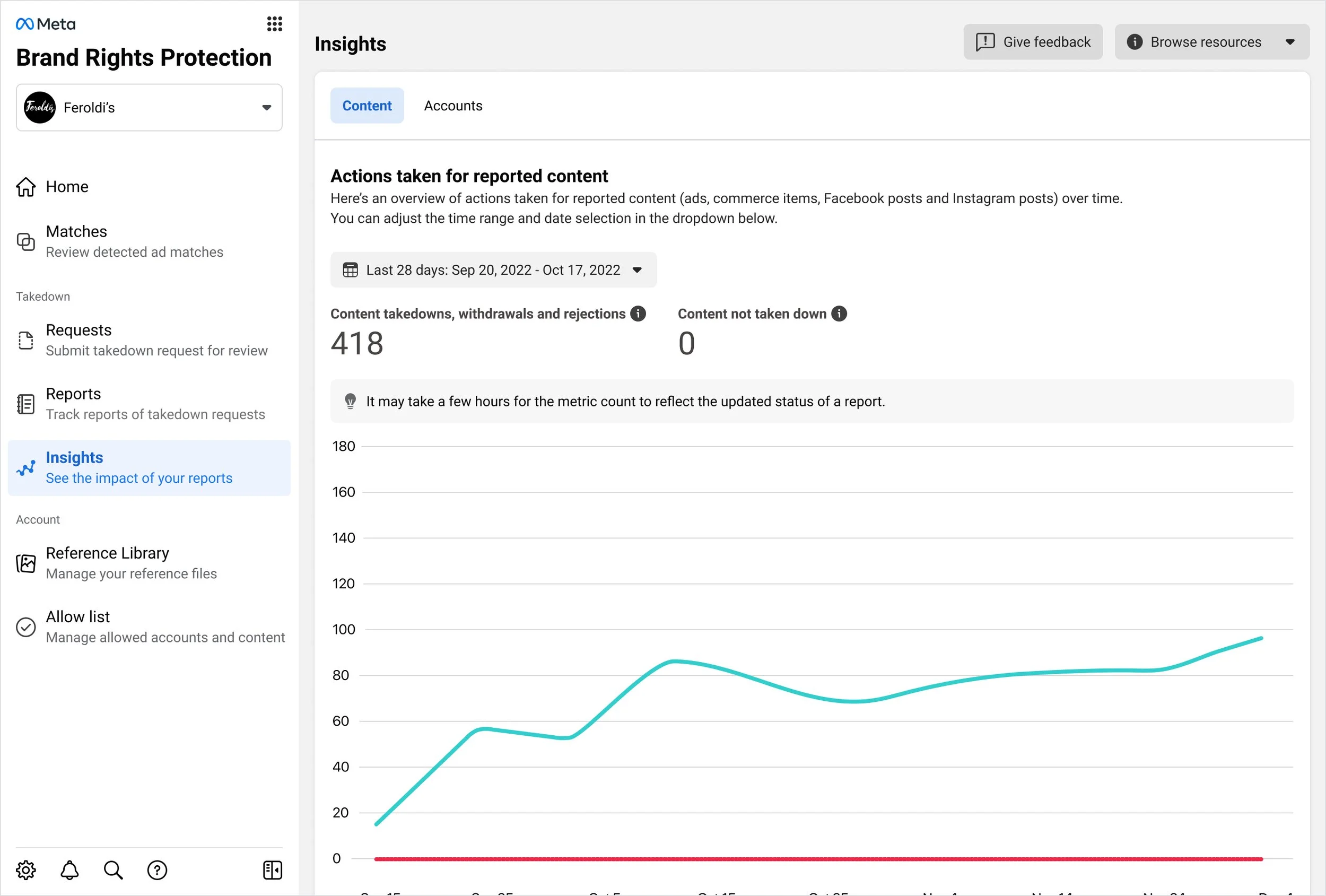
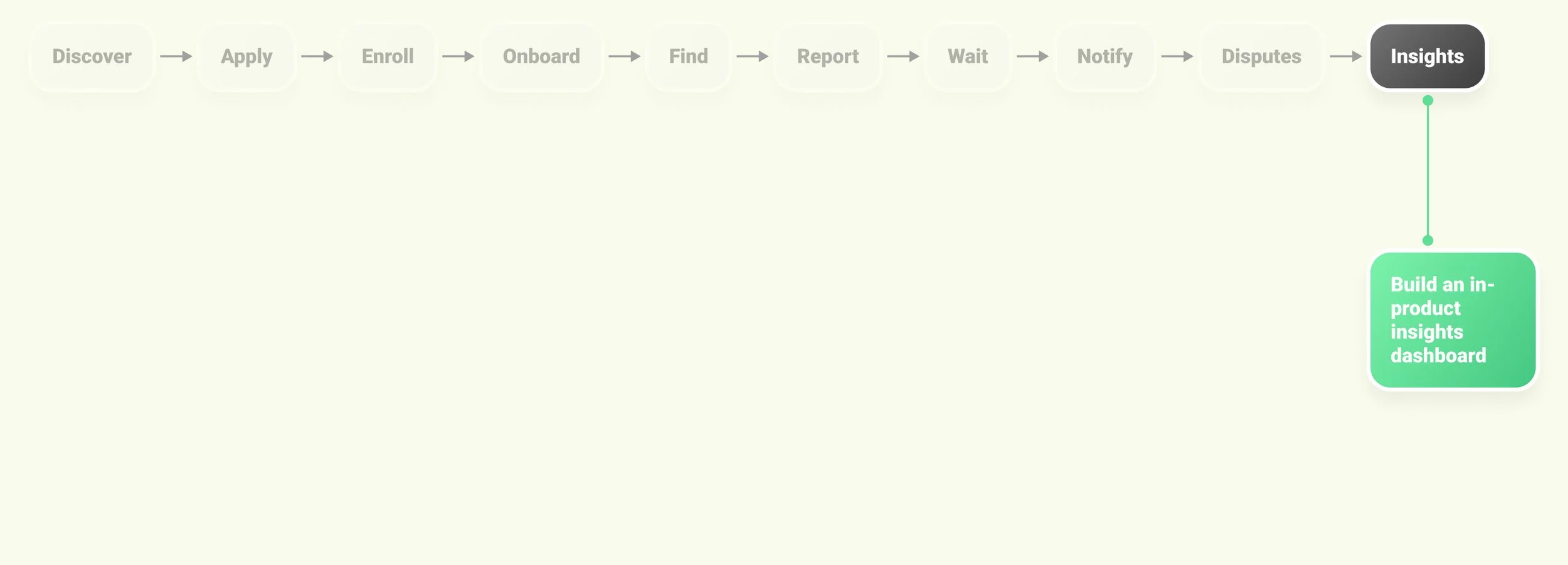
Provide insights
One of the final pieces and an added value we intended to provide brands is an insights dashboard. This allowed them to see the impact of their work as they’re protecting their brand.
Beta testing with brands
I collaborated with our UX Researcher in having conversations with brands about the features our team has built. This helped us get real-world feedback on what their sentiments are and we iterated quickly to fix these before going to market with our public launch. These fixes include bugs, lack of clarity in what some terms mean, and performance issues.
Outcomes
After a year of our team’s ownership, Brand Rights Protection has had exponential growth in terms of enrolled brands as well as monthly active use. On the qualitative side, the product has also received high ratings for user satisfaction. The next step would have been to build on the “Disputes” part of the experience as well as building recommendations to augment manual search.
Press
The Verge: “Facebook and Instagram are making it easier for brands to file IP takedowns”
Search Engine Journal: “Meta Lets Brands Search Facebook & Instagram For Stolen Content”